
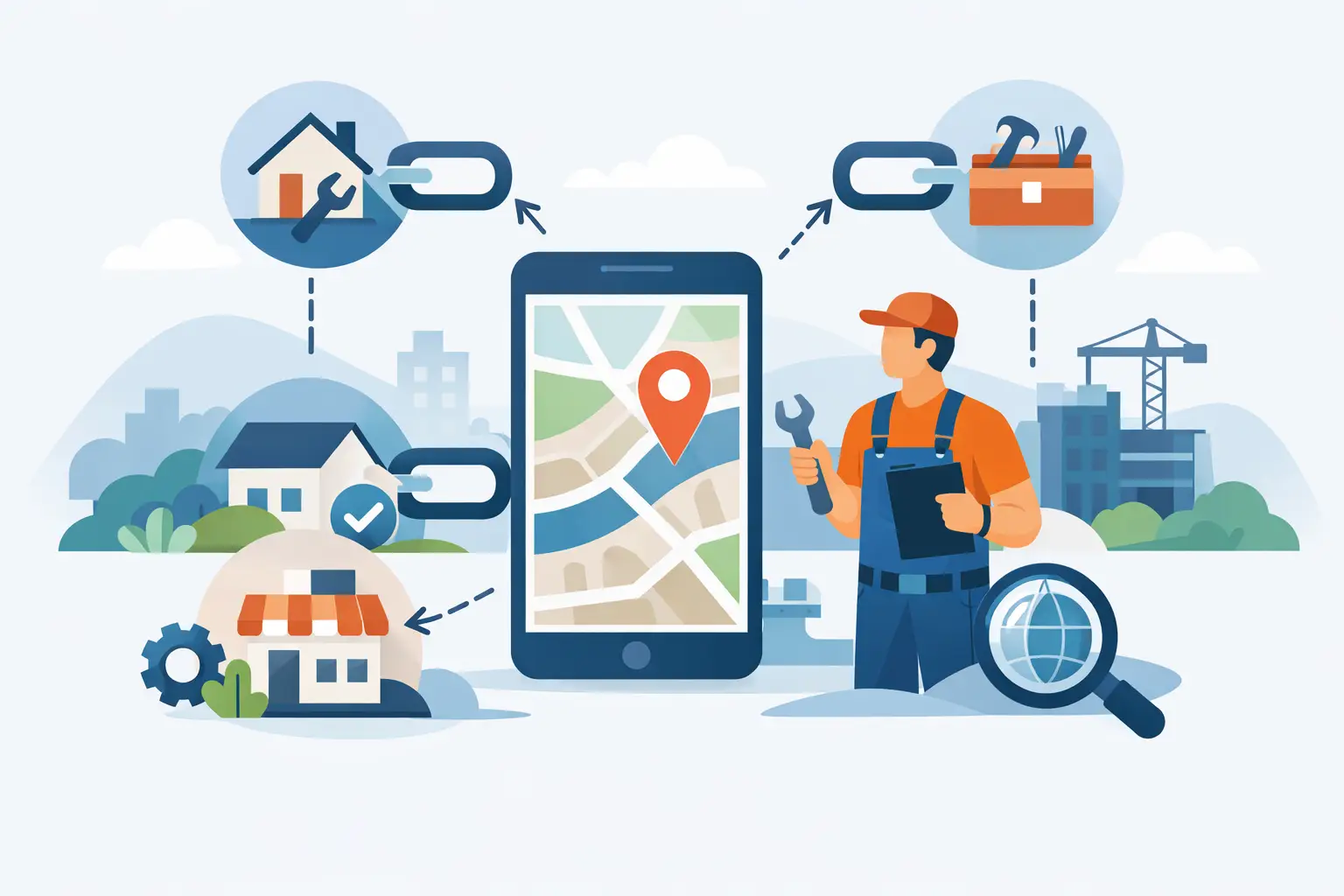
Local backlinking Building for tradespeople can be out all month and still get beaten in Google by a weaker competitor with better links. That is the reality of local SEO. Local backlink building for tradespeople is not about collecting random directory listings or buying a bundle of cheap placements from someone overseas. It is about getting the right local signals from the right websites so Google trusts your business in the suburbs and towns where you actually want to work.
Thank you for reading this post, don't forget to subscribe!If you are a plumber, electrician, roofer, chippy or builder, backlinks do two jobs. They help your website rank in the organic results, and they support your Google Business Profile visibility in the map pack. That means more calls, more quote requests and less reliance on lead platforms that clip the ticket on every job.
Why local backlink building for tradespeople still works
A lot of business owners get sold the wrong story. They are told content alone will do it, or that posting on social media every day will somehow push them to the top. Neither is enough in a competitive local market. If three plumbing companies all have decent websites and a handful of reviews, the one with stronger local authority usually pulls ahead.
Google looks for proof that your business is real, relevant and trusted in a geographic area. Backlinks from reputable local websites, such as established suppliers, local news outlets, or industry associations, are more valuable. A mention from a local supplier, a chamber of commerce listing, a builders association profile, a local news feature or a sponsorship citation all help build that trusted picture.
That does not mean every link has equal value. One genuine local link from a relevant business or publication can do more than fifty junk listings on dead directories. Focusing on quality helps tradespeople feel assured their efforts are meaningful and effective, avoiding wasted resources.
What a strong local link profile looks like
For tradespeople, the best backlink profile is usually a mix rather than a single tactic. You want local relevance, industry relevance, and enough authority to make a difference. If you only chase local links, you may not build enough strength. If you only chase high-authority links without local context, you can miss the trust signals that matter in your service area.
A healthy profile often includes local business citations, links from merchants and suppliers, trade bodies, community sponsorships, local press mentions, niche guest posts and selected authority placements. Ensuring consistency and transparency across your citations helps tradespeople feel confident that their profiles accurately represent their businesses and builds trust.
This is where many tradespeople are taken advantage of by generic agencies. They use the same list for every client, regardless of the trade or the city. That is not a strategy. That is fulfilment.
The local links that actually move rankings
Supplier and trade partner links
If you buy materials, tools or services from known suppliers, ask for stockist or partner listings where appropriate. Builders can often get links from architects, certifiers, developers or specialist subcontractors. Electricians and plumbers can pick up relevant mentions from wholesalers and trade partners. These links make sense in the real world, which is exactly why they work.
Local associations and membership sites
Trade associations, chambers of commerce, and local business groups can serve as solid trust signals. Not every listing is powerful, but the right ones help validate location and industry relevance. If you are already paying membership fees somewhere, there should be some SEO value coming back.
Community and sponsorship links
Supporting the local footy club, sponsoring a school fundraiser or helping with a charity event can earn backlinks if handled properly. The key is not to spend money on a logo for a page that isn’t being visited. You want real local organisations with active websites and a strong community presence.
Local PR and project-based mentions
If you have completed an interesting project, won an award, expanded your team or taken on a major community job, that can become a local press angle. Most trades ignore this. Smart operators turn real business activity into digital authority.
Niche guest posts and authority placements
This is where many local campaigns either stall or scale. Local links alone can only take you so far in tougher markets. A builder in a competitive city may need stronger guest posts and authority links around home improvement, construction or property topics to really push. The trick is control. If your provider is reselling from the same public marketplaces as everyone else, you are paying a premium for recycled stock.
What tradesmen should avoid
There is no shortage of rubbish in link building. If a package promises hundreds of backlinks for the price of a few takeaway coffees, you are not buying authority. You are buying noise. Focus on quality over quantity. Relevant, local, and authoritative links will deliver better results than mass-produced, irrelevant backlinks that can harm your rankings.
Avoid spammy blog comments, private blog networks built on obvious junk domains, mass-submitted directories, irrelevant foreign sites and anything that looks templated to death. Also, avoid agencies that cannot tell you where links come from, who writes the content or whether placements are indexed and trafficked.
There is also a subtler mistake: building links to a weak site. If your website is slow, your service pages are thin, and your location targeting is a mess, backlinks have less to work with. Links amplify what is already there. They don’t fix a broken offer or a poorly structured site.
How to approach local backlink building for tradesmen
Start with your core money pages. If you want leads for emergency plumbing in Gateshead, kitchen renovations in Newcastle, or switchboard upgrades in Lake Macquarie, please ensure those pages exist and are worth ranking. Then build links that support those exact themes and service areas.
Next, sort the foundation. Your Google Business Profile should be complete. Your citations should be accurate. Your site should clearly show services, suburbs, contact details, and trust signals such as reviews, licences, and project proof.
After that, build in layers. Foundational local citations first. Then, the relevant local and trade links. Then, stronger authority links push the domain and key service pages. This process takes time, often months, which helps tradespeople feel patient and confident that steady effort leads to sustainable growth, not quick fixes.
It also depends on the market. A solo sparkie in a small town may move quickly with a modest campaign. A roofing company in a major city may need a much stronger push because competitors have years of established relationships behind them: same trade, different battlefield.
Why control matters more than volume
Most link sellers do not control anything. They outsource the work, buy from public vendors and mark it up. That leads to inconsistent quality, repeated placements, and very little transparency when things go wrong.
For a local service business, that is a bad gamble. Please select the links for your market, trade, and growth stage. You also need someone who will tell you when not to buy more links yet – for example, when your service pages need work first, or your location targeting is too broad.
That is why the operator-led model works better. When the person building the campaign understands both off-page SEO and local lead generation, the strategy gets sharper. You stop chasing vanity metrics and start building a profile that supports actual enquiries.
At Fuelled SEO, that is the angle. No fluff, no bloated retainer talk, no mystery-box outsourcing. Just controlled off-page growth built around rankings, map visibility and leads.
Measuring whether your links are doing the job
Do not judge a backlink campaign by link count alone. Tradesmen should care about movement in local keyword rankings, Google Business Profile visibility, organic traffic to service and suburb pages, and the number of calls or form leads coming through.
Some links will have a direct effect. Others work as part of the bigger authority picture. That is normal. SEO is rarely one link in, rankings out. It is cumulative pressure. The right campaign makes your site harder to ignore over time.
If you are seeing no movement after months of spending, ask hard questions. Are the links relevant? Are they indexed? Are they pointing to the right pages? Is the site itself strong enough to convert the authority being built? A decent SEO should answer that plainly, not hide behind jargon.
Tradespeople do not need fancy theory. They need a phone that rings and a diary that stays full. Local backlink building, done properly, helps make that happen. The businesses that win are usually not the ones doing the flashiest marketing. They are the ones building trust signals steadily while everyone else chases shortcuts. If you treat backlinks like fuel rather than decoration, Google tends to notice.