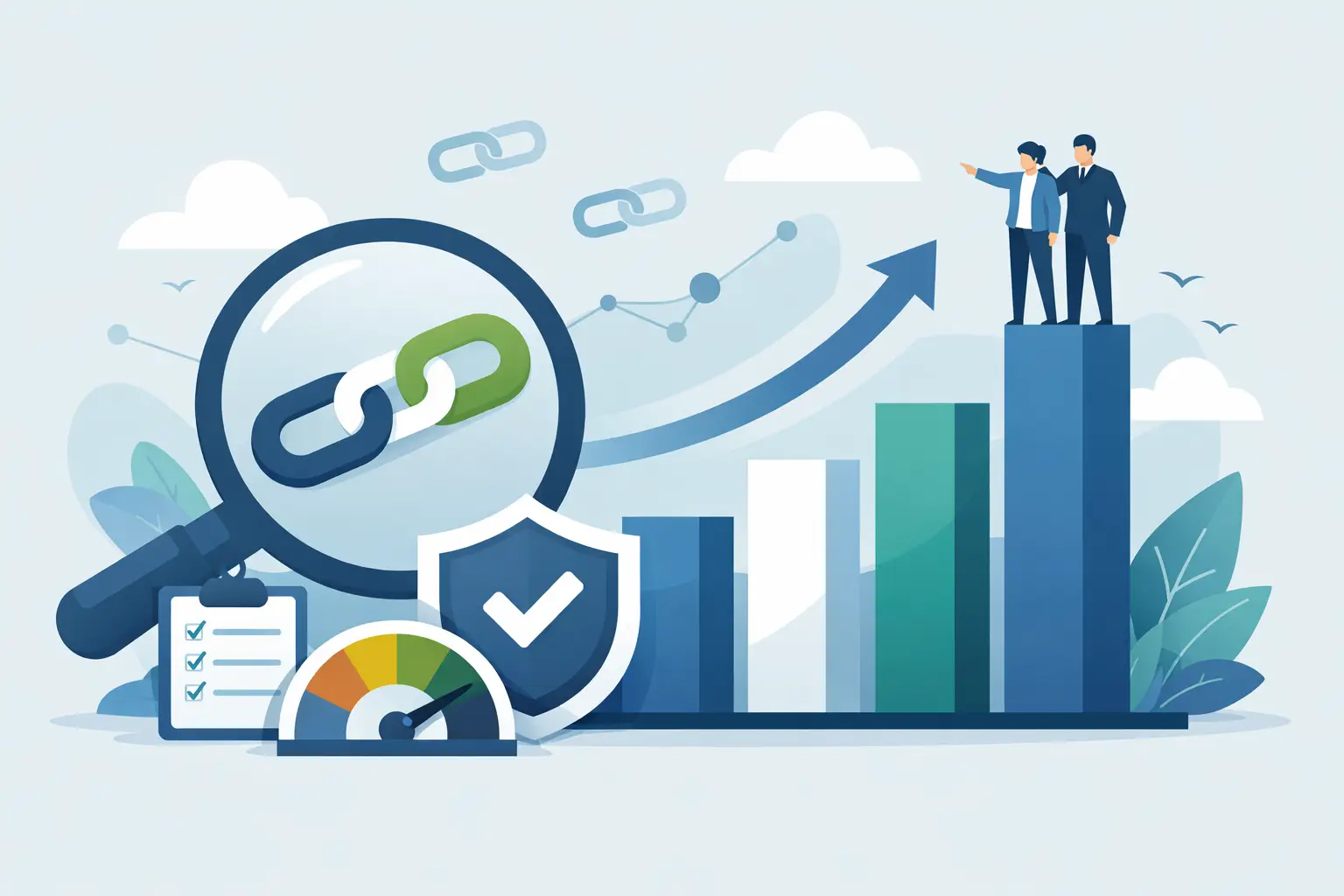
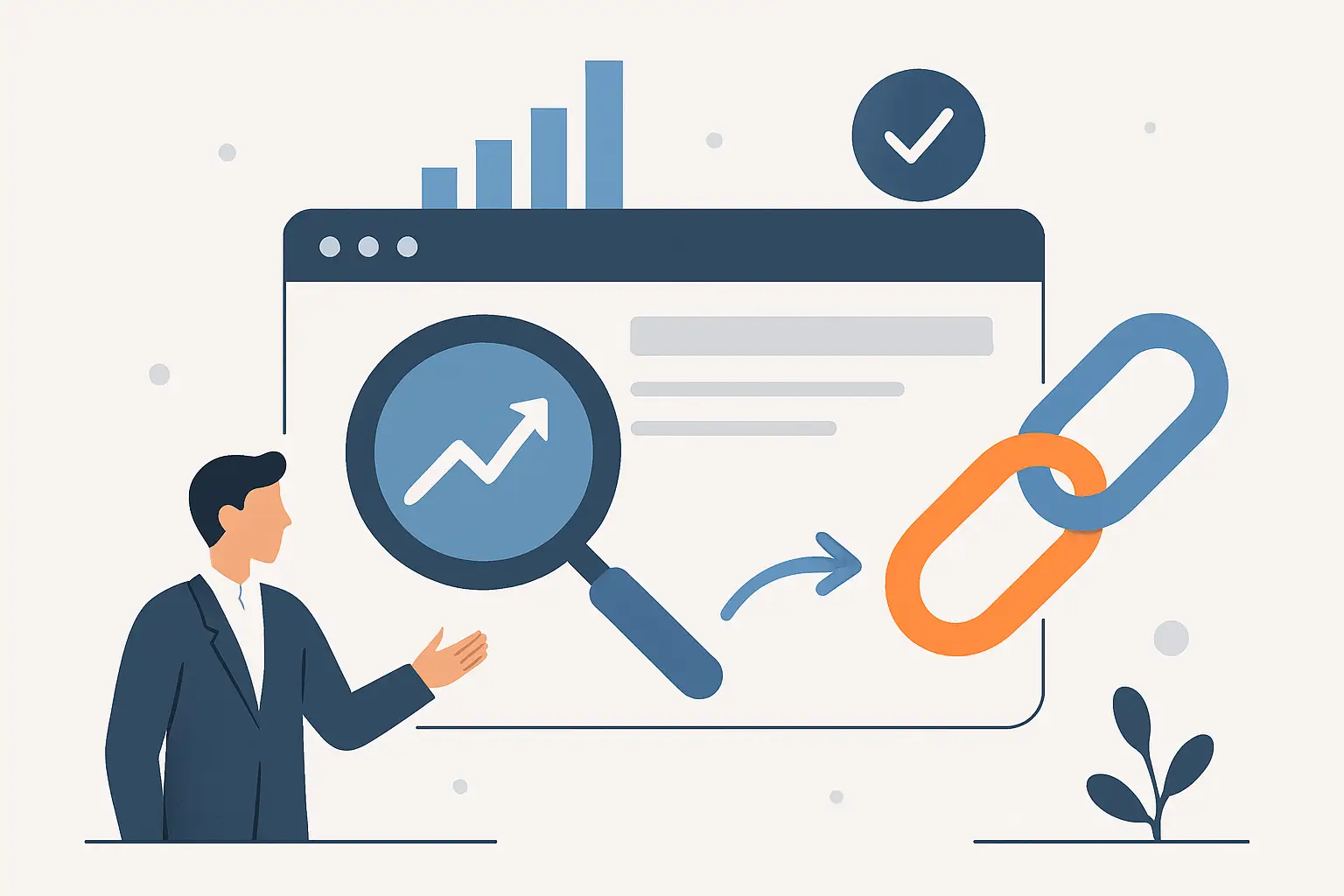
SEO and backlinking are important even if you can have the cleanest website in your industry, the fastest load speed, and blog posts that read as if a barrister and a copywriter in a pub wrote them. If nobody authoritative is linking to you, Google has very little reason to treat you like the obvious choice.
And you can also have a stack of links pointing at your site – but if the pages they land on are thin, confusing, or irrelevant to what people search, you are basically pouring petrol onto wet wood.
That is why the phrase “seo and backlinking go together” is not a cute slogan. It is the core of a successful ranking strategy and builds your confidence in long-term results. One creates relevance and converts traffic. The other builds authority and trust, helping you feel more secure in your efforts.
SEO and backlinking go together for one simple reason
Google is trying to rank the most useful and trustworthy results. Usefulness comes from what is on your site. Trust comes from what the rest of the web says about your site.
On-page SEO tells Google what a page is about and why it deserves to rank for a specific query. Backlinks tell Google whether other sites are willing to vouch for you.
If you are in a sensitive niche like adult or gambling, the principle is the same. Still, the quality control and risk management matter even more, so knowing how to identify authoritative sites is crucial.
Here is the trade-off most business owners miss: you can compensate for weaker on-page with brute authority for a while, and you can compensate for weaker authority with perfect on-page in low-competition areas. But in any serious market, you need both. Otherwise, you get stuck doing SEO “busy work” that never turns into rankings.
What on-page SEO can links not
Backlinks are not magic dust. They do not rewrite your page, fix your site structure, or clarify your service offering. They amplify what is already there.
On-page SEO is where you earn relevance. That means:
- Your page matches what the searcher wants, not what you feel like writing about.
- Your headings, copy, and internal links make it obvious what the page is for.
- Your site structure helps Google understand your main services and your supporting topics.
- Your pages load quickly and work properly on mobile devices, because that is where most local leads come from.
If you want an easy mental model, think of on-page SEO as the engine tune and backlinking as the traction. A tuned engine with bald tyres does not win races. Tyres on a broken engine do not win either.
A common example: a plumber wants to rank for “emergency plumber in [town]”. If the page is buried, the title is vague, and the content doesn’t address emergency call-outs, Pricing expectations, and service coverage, links will be less effective than you might expect. You might see a brief bump, then plateau, since the page isn’t the best answer.
What backlinking does that on-page cannot.
On-page SEO can make you the best answer. Backlinks help convince Google you are the most credible answer.
In competitive niches, the top results usually have two things in common:
First, they have solid topical coverage – service pages plus supporting content that proves depth.
Second, they have authority signals – links from sites Google already trusts.
Backlinks do a few heavy-lift jobs:
They transfer authority
A link from a strong, relevant domain can move the needle because it passes authority, but understanding backlink quality helps you assess ROI and avoid wasting resources.
They speed up trust in new or growing sites.
If your domain is newer, you are asking Google for a favour by trying to outrank established competitors. Strategic link acquisition shortens the “prove it” period.
They help your key pages compete.
Lots of businesses accidentally build links only to their homepage, then wonder why service pages do not rank. A smart backlink strategy supports the pages that actually generate leads.
They create defensibility
Rankings are a fight. When a competitor starts investing, weak sites get pushed down. A steady authority build makes you harder to dislodge.
The dependency is the point: you can write more content forever, but if your competitors have stronger authority, you are fighting with one hand.
The dirty secret: most “SEO” packages avoid the hard part
Many agencies sell on-page improvements because they are easy to deliver and easy to report on. “We optimised metadata.” “We updated headings.” “We added 500 words.” Fine. Necessary, even. But it is not the whole game.
Link building is harder. It requires relationships, assets, quality control, and a clear purpose. Approaching it strategically helps you feel purposeful and confident that your efforts are meaningful and effective.
It is also where most campaigns either take off or die quietly.
Cheap bulk links, overseas blasting, and recycled marketplace placements can create a short-term bump, followed by a long-term headache. Sometimes nothing happens at all, which is almost worse because you have paid for noise.
There is a place for volume in SEO, but not at the expense of control. If you do not know where your links are coming from, who owns the sites, or whether those sites meet standards, you might feel uncertain about the safety of your strategy. Gaining control helps you feel more confident in your decisions.
How to combine SEO and backlinking without wasting six months
If you are a local operator, you do not need an academic SEO strategy. You need a sequence that gets traction and compounds.
Start with pages that make you money.
Before you chase links, check you have dedicated pages for each core service and each core location you actually serve. If you bundle everything onto one “Services” page, you are forcing Google to guess.
The goal is not to create fifty thin pages. The goal is to have a few strong, specific pages that can genuinely rank and convert.
Build supporting content like a cluster, not a diary
Most blog strategies are random. You end up with posts like “How to Choose a Great [Trade]” written because someone needed something to publish.
A content cluster is different. It is built around a money page. Supporting articles answer related questions, target long-tail searches, and internally link back to the service page in a way that makes sense.
This matters for backlinking because links pointing to a well-structured cluster tend to lift the whole topic area, not just a single URL.
Then add links with intent.
This is where most people get it backwards. They buy links first, then scramble to decide where to point them.
A proper approach is deliberate:
- Some links should strengthen your overall domain authority.
- Some should go directly to priority service pages.
- Some should support cluster content, thereby funnelling authority internally.
Where you place links depends on the competition and your current profile. If your homepage is already strong but service pages are weak, you do not need more homepage links. If your domain is brand new, you may need a base layer first.
Keep it steady, not spiky.
Google is not allergic to link building. It is allergic to manipulation patterns.
Sudden spikes, unnatural anchor text, and a flood of irrelevant placements are the kinds of footprints that turn a “growth campaign” into a liability. A controlled, month-to-month pace is usually safer and more sustainable, especially in regulated or sensitive industries.
What “good backlinks and SEO” actually mean (and what they depend on)
People love to ask for “high DA links” as if it were a menu item. Authority metrics can be useful for comparison, but they are not the whole story.
A good backlink is typically:
- Relevant enough that the placement makes sense to a human reader.
- On a site with real history, real indexing, and signs of genuine maintenance.
- Placed in content that is not obviously churned out for SEO only.
- Built with sensible anchors that do not scream manipulation.
The “it depends” part: a hyper-relevant niche site with modest metrics can outperform a generic high-metric site for certain searches. Likewise, if you are trying to break into a brutally competitive SERP, you may need higher-authority placements to enter the conversation.
Local SEO adds another layer. Your Google Business Profile, reviews, and local citations matter, but backlinks still play a big role in why one business shows above another when the map pack is crowded. If you are doing everything else right and you are stuck, authority is often the missing lever.
The control problem: why sourcing matters as much as strategy
Here is the uncomfortable truth. Most link sellers do not control anything. They resell placements from the same pools others use, with thin margins and lower standards.
That leads to two problems.
First, the sites get hammered with guest posts and outbound links until they become obvious link farms. Your link might be “live”, but the asset is decaying.
Second, the quality is inconsistent. One month you get decent placements, the next month you get lower-quality results, and there’s no clear explanation.
This is why asset control is a genuine differentiator. When the team building links has direct access to the publishing network, they can protect quality, maintain consistent standards, and choose placements that suit your niche and risk profile.
If you want the blunt version, you would not let an unknown subcontractor handle your reputation with zero oversight. Do not do it with your link profile either.
If you want a specialist that leans heavily into that off-page side, Fuelled SEO (fuelledseo.com.au) is built around controlled link acquisition and authority-building, with month-to-month packages for businesses that want movement without being locked into a long contract.
Seo and Backlinking result you are really buying: momentum.
Business owners do not wake up wanting “SEO”. They want calls, bookings, and quote requests.
When SEO and backlinking work together, you stop getting vanity improvements and start getting momentum. Pages climb, impressions grow, and the site becomes easier to rank with each new piece of work because you are building on a stronger base.
If you are deciding where to put your next budget, ask a simple question: Do you need to be a better answer, or do you need more authority behind the answer you already have?
Be honest about it. Then commit to the side you have been neglecting.
The helpful closing thought is this: if your SEO plan does not include controlled link acquisition and a site structure worth linking to, it is not a plan – it is hope with invoices.

Related Posts

White Label Link Building Risks
Manual Outreach vs Reseller Links
Google Business Profile Backlinks That Work
Google Safe Link Building That Still Wins
Local Backlinks Building for Tradesmen
Content Clusters for Local SEO That Rank
Guest Posts vs Niche Edits: Which Wins?
Adult SEO Link Building That Actually Works
How to Improve Google Maps Ranking Fast
Authority Backlinks Guide for Real Rankings
Authority Link Growth Case Study Results- Newcastle SEO Niche Relevant Backlinks: Why Quality Beats Quantity Every Time

Fuelled SEO Guest Posts
Exclusive Guest Posts Placements are Worth It?
How to Rank Local SEO Services That Get Leads
Local SEO Newcastle: Dominate Your Market
Fuelled SEO the Newest Newcastle SEO Agency
How to Vet a Link Building Agency Properly
Local SEO vs Backlinks: What Wins?
Backlink Audit for Penalty Risk That Works















Monthly Link Building Packages That Work
Newcastle SEO: How Local Businesses Rank Higher in 2026
AI SEO Newcastle:
How to Buy Backlinks Safely and Win
Link Velocity Best Practice That Works
Guide to Google Maps Ranking Factors
Backlinks for Adult Websites That Actually Work- Agency vs Specialist: What Newcastle Businesses Need to Know About SEO
Website Structure That Drives SEO Growth
Google Business Profile Checklist That Wins
Electrician seo Newcastle- Monthly SEO Packages
SEO Consultant Newcastle Playbook: Expert Strategies for Newcastle Businesses
What Makes a Backlink Powerful?
Why Seo Services in Newcastle are Expensive
DA 90 Backlinks: Worth It or Pure Hype?
Domain Authority 90 Backlink Packages
How Many Backlinks Per Month Is Safe?
In House SEO vs Agency: What Actually Wins?
Premium Guest Post Newcastle: What You’re Really Buying