If your rankings are flat, your phone is quiet, and you’re hearing “just post more blogs,” you are asking the right question: in-house SEO vs. an agency. Not because one is always better, but because the wrong setup can cause frustration, waste months, cash, and momentum. For most businesses, the real issue is not who does the work. It is whether the work being done can actually move rankings.
SEO is not one job. It is technical fixes, site structure, content planning, local signals, and off-page authority. That matters because the answer changes depending on what kind of business you run, how competitive your market is, and whether you need a steady stream of leads or just a bit more visibility.
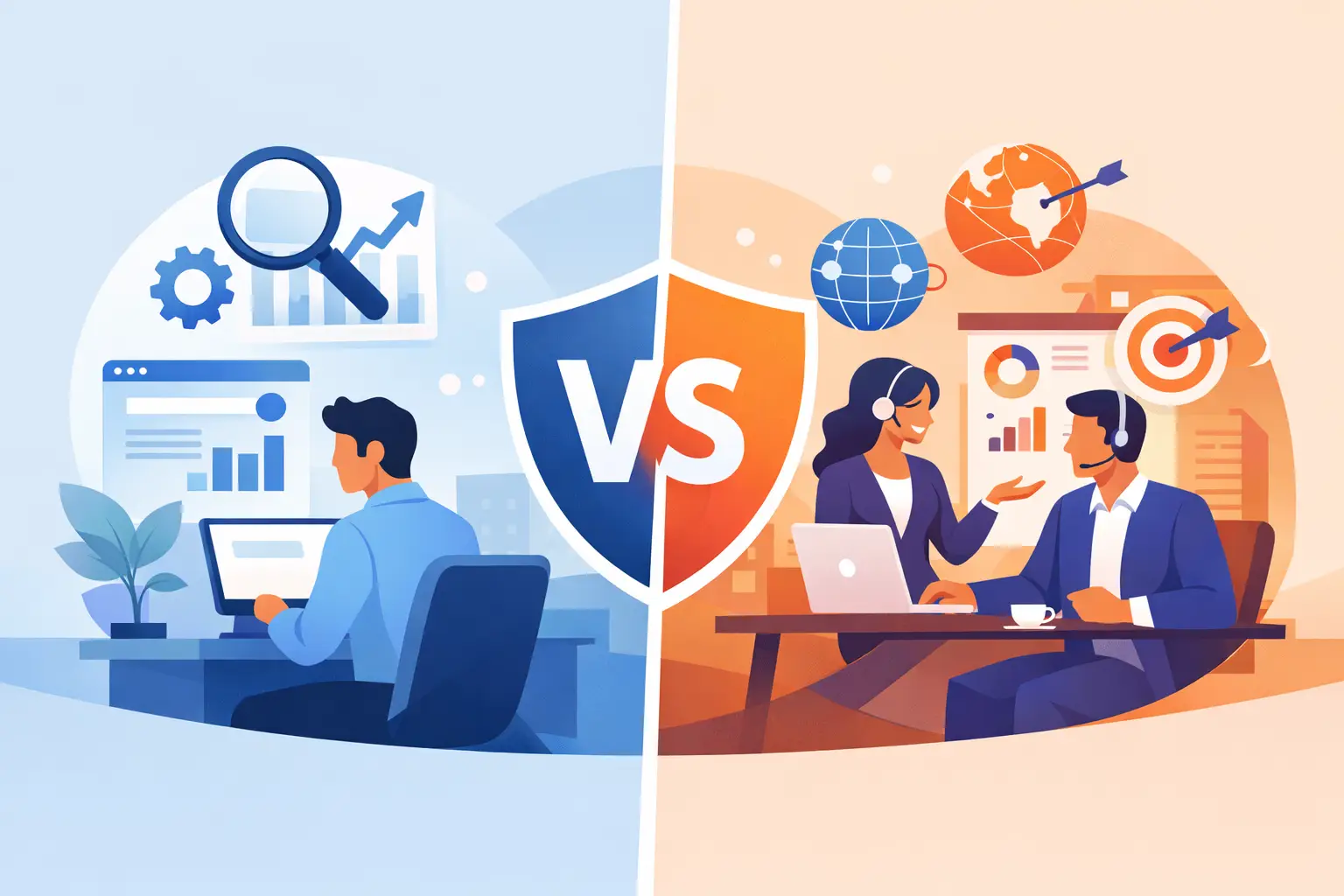
In-house SEO vs agency: the real difference
The clean version is simple. In-house SEO gives you someone inside the business who knows your services, your margins, and your customers. An agency gives you a team, external experience, and usually broader execution power.
But that surface-level comparison misses the part that actually hurts rankings. A single in-house hire is rarely brilliant at everything. They might be strong on content but weak on links. They may understand local SEO but struggle with technical audits. They could be sharp commercially but have no access to the kind of authority placements that move a site in a hard market.
An agency can fill those gaps, but plenty of agencies are just account managers sitting in front of outsourced fulfilment. That is where business owners get stung. The pitch sounds polished, the report looks busy, and six months later, nothing meaningful has shifted.
So the decision is not really about in-house SEO vs. agency in the abstract. It is whether you want to build internal capability, buy specialist execution, or blend both without creating a mess. This clarity can empower you to make confident choices aligned with your growth goals.
In-house SEO makes sense primarily for larger businesses or those with multiple service lines, where SEO becomes a core operation rather than a peripheral marketing task. This helps decision-makers understand when internal teams are most beneficial.
In-house works best when SEO is becoming a core operating function, not just a marketing channel you check once a month. If you run a larger business with multiple service lines, regular content production, and a budget sufficient to properly support one strong hire, it can be a smart move.
A good in-house SEO can sit close to your sales team, hear customer objections, spot profitable keyword themes, and work directly with developers and content staff. That speed matters. Internal teams do not need long email chains to change a title tag, improve a service page, or build a content cluster around a high-converting offer.
There is also more brand alignment. An in-house specialist understands your tone, your market, and what counts as a qualified lead. That is useful if you have nuanced services in finance, health, legal, gambling, or adult, where generic SEO advice often falls apart fast.
The problem is cost and range. Hiring one capable SEO in the UK or Australia is not cheap. Hiring someone who can handle technical SEO, local SEO, content strategy, link acquisition, and high-level reporting is even harder. Most people are strong in two or three of those areas, not all of them.
If you hire in-house and expect one person to be a strategist, writer, outreach specialist, analyst, developer liaison, and project manager, you are not building an SEO function. You are setting someone up to tread water.
The hidden weakness of in-house teams
Link building is where many in-house setups stall. This is the bit people avoid saying out loud.
You can hire an internal SEO who knows how backlinks matter. That doesn’t mean they can consistently secure quality placements, vet domains properly, avoid low-quality networks, negotiate costs, and scale authority without taking risks. Good off-page SEO relies on access, relationships, process, and experience. It is hard to build from scratch internally unless SEO is a major line item in your business.
That is why many in-house teams handle content and on-page work well enough, then plateau. The site gets cleaner, the pages improve, but the authority gap remains.
When an agency is the better call
An agency makes more sense when you need movement now, when competition is real, or when you know your internal team cannot cover every part of SEO properly.
A strong agency should bring tested processes, faster execution, and specialist depth. That means technical reviews, content mapping, local optimisation, and the off-page firepower to push rankings where they need to go. If you are a plumber in a crowded area, a dentist trying to rank for high-value treatment terms, or a business in a niche where weak links can cause damage, experience matters.
Choosing an agency requires scrutiny beyond shiny decks. Look for transparency in their link sources, clear explanations of how backlinks support your strategy, and proven results. This guides readers in selecting reputable partners and avoiding wasteful investments.
A proper specialist agency should be candid about timelines, budget constraints, and what your site needs before link velocity increases. This transparency helps you feel more in control and confident that your investment aligns with your goals, rather than feeling uncertain or overwhelmed.
For many small- to mid-sized businesses, that is the sweet spot. You do not need to recruit, train, and manage a full SEO capability internally. Please ensure qualified people are doing the work directly.
In-house SEO vs agency on cost
Plenty of business owners start here, and fair enough. Cost matters. The headline cost isn’t the right number.
While a salary might seem cheaper upfront, consider additional expenses like pension, software, training, management, and support staff. For example, hiring a full-time SEO with all the necessary skills can cost [specific amount], making an agency retainer a more predictable and comprehensive investment. This helps readers assess true costs more accurately.
An agency can look more expensive every month. Still, if it already has systems, writers, strategists, technical support, and authority-building capabilities, you are buying a machine rather than a single pair of hands.
That said, agencies also waste money when they are bloated, generic, or overly focused on vanity metrics. If all you get is traffic graphs and branded keyword growth, the cheaper option is whatever you did not buy.
The hybrid model is often the strongest.
For many businesses, the best answer is neither purely in-house nor purely agency.
A hybrid model works when someone inside the business owns commercial priorities, while a specialist agency handles the heavier execution. Your internal person can keep messaging accurate, feed the agency with service insights, approve priorities, and ensure SEO aligns with revenue goals. The agency can then take care of audits, strategy, content direction, and off-page work that most businesses struggle to scale on their own.
This setup is especially strong if you already have a marketing coordinator or content person but need authority-building and technical strategy from operators who do it every day. It also reduces risk. You are not betting the entire outcome on one hire, and you are not unquestioningly handing your business over to an outside team.
How to choose without guessing
Ask a harder question than “which is better?” Ask what is actually stopping growth right now.
If your website is outdated, your pages are thin, your Google Business Profile is neglected, and no one internally owns digital performance, an agency will usually gain traction faster.
If your site already has decent authority, your business produces content regularly, and you want tighter integration with sales and service teams, building in-house capability could pay off.
If the main gap is links and authority, be honest about it. This is where specialist support usually wins. Not because agencies are magic, but because controlled access, proper vetting, and campaign discipline are difficult to recreate in-house.
That is also why some businesses work with specialist operators such as Fuelled SEO rather than broad retainers that try to be everything to everyone. If rankings are a battle, off-page authority is often the bit that decides it.
What a bad decision looks like
A bad in-house decision is hiring too junior, expecting miracles, and giving them no support.
A bad agency decision is choosing the cheapest package, getting bulk links from unknown sources, and then being surprised when nothing sticks.
Both fail for the same reason. They confuse activity with progress.
Good SEO should feel grounded in reality. Please make sure you know what is being improved, why it matters, and what time frame makes sense. No guarantees. No fantasy. Just disciplined work that compounds.
If you are deciding between in-house SEO and an agency, do not choose based on who talks best in the pitch. Choose based on where the bottleneck sits, who can fix it properly, and whether they actually control the parts of SEO that move the needle. The best setup is the one that gets your business more visibility, more qualified calls, and a stronger position six months from now than it has today.

Related Posts

Backlinks for Adult Websites That Actually Work
DA 90 Backlinks: Worth It or Pure Hype?
Local Backlinks Building for Tradesmen
Premium Guest Post Newcastle: What You’re Really Buying
SEO for Electricians Local Leads That Convert
Adult SEO Link Building That Actually Works
Exclusive Guest Posts Placements are Worth It?
How to Choose Backlink Packages That Work
Backlink Audit for Penalty Risk That Works
White Label Link Building Risks
Content Clusters for Local SEO That Rank
Authority Backlinks Guide for Real Rankings
Monthly Link Building Packages That Work
Why SEO and Backlinking Win Together
How to Improve Google Maps Ranking Fast
Guest Posts vs Niche Edits: Which Wins?











Local SEO vs Backlinks: What Wins?
How Long Does Link Building Take?
Guide to Google Maps Ranking Factors
Website Structure That Drives SEO Growth
Why Seo Services in Newcastle are Expensive
Google Safe Link Building That Still Wins
What Makes a Backlink Powerful?
How to Vet a Link Building Agency Properly
How to Rank Local SEO Services That Get Leads- Agency vs Specialist: What Newcastle Businesses Need to Know About SEO
Authority Link Growth Case Study Results
Google Business Profile Backlinks That Work
How to Buy Backlinks Safely and Win
Manual Outreach vs Reseller Links
What a Managed Link Building Service Does