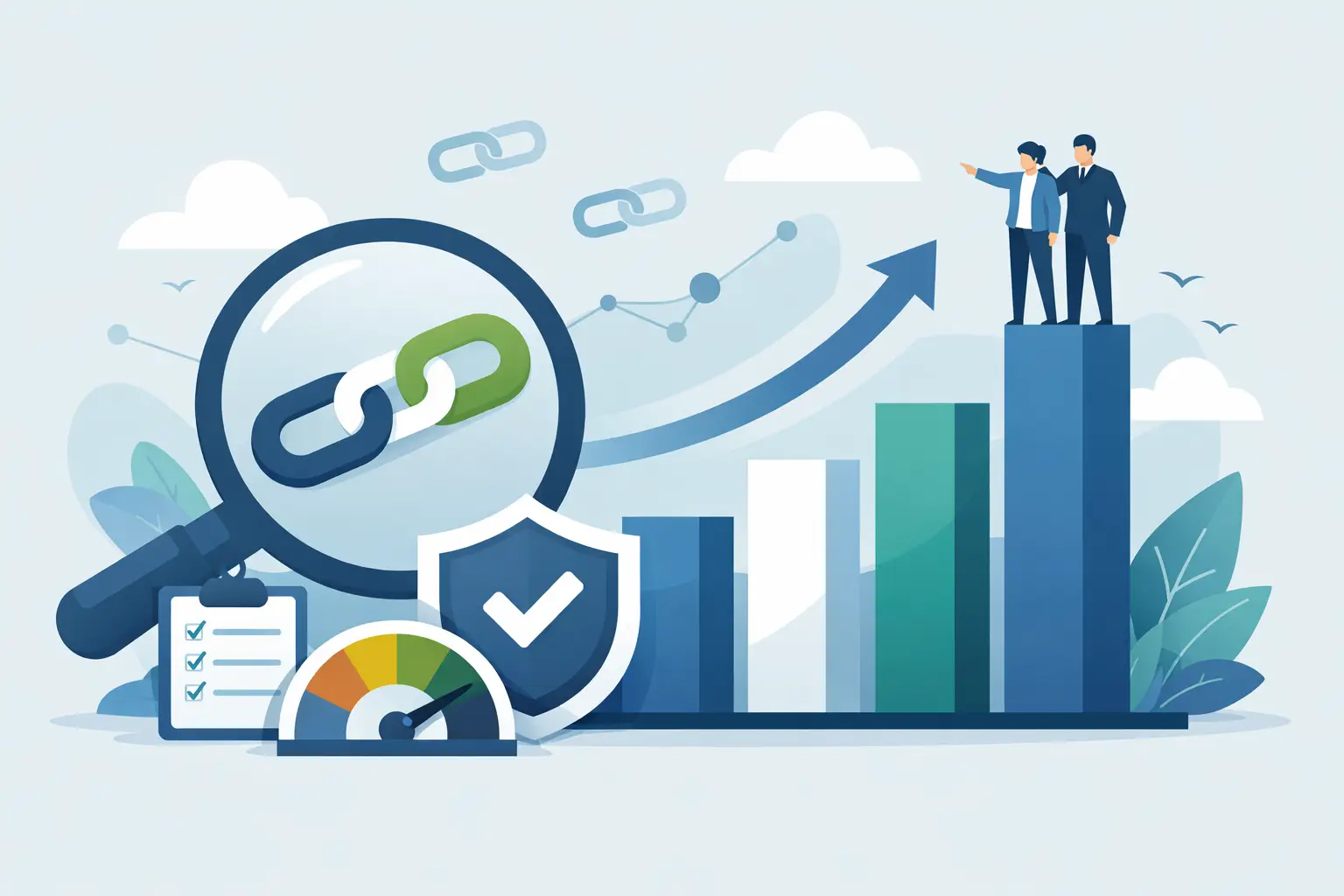

If A Link Building Agency promises 100 links for the price of a decent plumber call-out, you are not buying growth. You are buying risk. That is usually where people start when learning how to vet a link building agency – after they have paid for bulk junk, seen no ranking lift, and been fed a report full of numbers that meant nothing to the business.
Link building is not a commodity. The right agency can move rankings, lift authority and help turn search into calls and leads. The wrong one burns budget, wastes months and leaves you trying to clean up someone else’s mess. So if you are about to hire a provider, here is what actually matters.
How to vet a link building agency without getting sold fluff
Most agencies know how to sell the dream. Fewer know how to build links that hold up. Your job is not to be impressed by jargon. Your job is to find out who is doing the work, where the links come from, and whether the strategy fits your market.
A decent agency should be able to explain its process in plain English. Not vague talk about outreach at scale, proprietary relationships and premium placements. Ask direct questions. Do they control the sites they place on, or are they buying from the same reseller lists everyone else uses? Do they build links specifically for your niche and location, or are they stuffing your site into random blogs with no relevance? If the answers are slippery, walk away.
Control matters more than most business owners realise. If an agency relies on outsourced vendors and white-label suppliers, it usually means less quality control, less transparency and less consistency. You are one step removed from the actual source of the link, and sometimes two or three. That is when standards drop fast.
Ask where the links really come from
This is the big one. Not “are the links high quality?” because every agency on earth says yes. Ask where they come from.
There are only a few honest answers. They either have direct publisher relationships, own or control parts of the network they use, do genuine manual outreach, or they buy from third-party marketplaces. The last option is where a lot of campaigns go soft. Those links are often recycled, overused and sold to anyone with a credit card.
That does not mean every marketplace link is useless. It means you should know what you are paying for. If the agency acts like link sources are some sacred secret, that is usually a bad sign. They do not need to hand over their whole playbook, but they should be transparent about the model.
An agency that controls assets has more skin in the game. It can manage quality, relevance and placement standards. It is also less likely to dump your site on spammed domains that have already been milked dry.
Relevance beats raw metrics
A DR90 link on a meaningless site is not magic. A relevant link on a trusted, real site in or around your niche often does more for you, especially if you are a local business.
If you are a dentist in Newcastle, a link from a decent health, local or business-relevant site can carry more weight than a flashy metric from a random publication that has never sent a visitor in its life. The same goes for electricians, mechanics, finance firms and any regulated niche where trust matters.
Good agencies talk about topical fit, traffic quality and context. Weak ones hide behind domain metrics because it is easier to sell a number than a strategy.
Check whether the strategy matches your stage
Not every business needs the same type of links. A newer site with thin content and weak structure will not get the same result from aggressive authority links as an established site with strong service pages and supporting content.
A serious provider should look at the whole picture before pushing a package. That includes your site age, current rankings, content depth, internal linking, page speed and the competitiveness of your market. If they skip that and go straight to pricing, they are selling stock, not strategy.
This is where many owners get caught. They think link building starts and ends with buying placements. It does not. Links amplify what is already on the site. If the target page is weak, the gain is limited. A proper agency will tell you when the foundations need work first.
That honesty matters. No decent operator can guarantee rankings, and anyone who does is trying to close you, not help you.
Look at Your Link Building Agency reporting, but do not get hypnotised by it
Reports should make it obvious what was built, why it was built and what movement followed. You should be able to see link type, target page, anchor approach and live status without needing a translator.
What you do not want is a monthly PDF full of vanity charts and nonsense metrics designed to distract from poor execution. More links does not automatically mean better SEO. More referring domains does not always mean better leads. The only reporting that matters in the end connects activity to visibility and business outcomes.
Ask how they measure success over a six-month window. If the answer begins and ends with domain authority, that is too shallow. Rankings, organic traffic to key pages, Google Business Profile visibility where relevant, and lead trends matter far more.
Ask about anchors and pacing
A lot of poor link campaigns fail because they are clumsy. Too many exact-match anchors, too fast, to the wrong pages. That is how you turn a decent strategy into an obvious pattern.
You want an agency that can talk sensibly about anchor text distribution, link velocity and page selection. Not in a lecture. Just enough to show they know how to build pressure without making your profile look manufactured.
This is especially important in harder verticals like health, finance, gambling and adult. Those niches need experience, not guesswork. If the provider avoids the question or gives you a generic answer, they may not have the depth you need.
Red flags that should kill the deal
Some warning signs are obvious. Others are dressed up as convenience.
Avoid agencies that guarantee page one rankings, sell massive volumes at suspiciously low prices, refuse to explain sourcing, or cannot show the kind of sites they place on. Be wary if every link is labelled guest post but none of the sites have real traffic, real audiences or any editorial standards.
Also watch for long lock-in contracts. Link building works over time, but that does not mean you should be trapped. Month-to-month keeps everyone honest. The agency has to keep performing, and you are not stuck funding a dead campaign because someone got you to sign twelve months of hope.
If you hear a lot about scale, automation and fulfilment teams, ask who is actually accountable. Many businesses have been burned by local sales teams fronting work that gets pushed offshore with no strategic oversight. Cheap fulfilment nearly always shows up somewhere – weak placements, poor content, sloppy anchors or all three.
The best agencies are blunt about trade-offs
A trustworthy agency will not tell you every link is premium or that every campaign suits every budget. They will explain the trade-off between authority, relevance, volume and cost.
Sometimes a smaller number of stronger, controlled placements is the right move. Sometimes a mixed strategy with foundational links, guest posts and selective authority injections makes more sense. It depends on your competition, your site and how hard you want to push.
That is the difference between advice and a menu. A real operator knows there is no one-size-fits-all package, even if services are productised.
If you want a simple benchmark, the agency should make you feel more clear-eyed, not more dazzled. You should come away understanding what they will do, what they will not do, and what results are realistic over time.
How to vet a link building agency before you spend a pound
Before you sign anything, ask for examples, ask how links are sourced, ask who controls quality, and ask what the first three months would actually look like for your site. Keep it practical. If they cannot answer practical questions, do not trust them with strategic work.
You are not hiring a motivational speaker. You are hiring someone to build authority in a way that helps your business win more search traffic. That takes control, discipline and honesty.
At Fuelled SEO, that is exactly why controlled assets, direct access and no-outsourcing models matter so much. You cannot dominate competitive search by buying whatever is floating around in reseller channels and hoping for the best.
Pick the agency that treats your site like a long-term asset, not a monthly invoice. That one decision usually saves more money than any bargain package ever will.

Related Posts

Fuelled SEO the Newest Newcastle SEO Agency
White Label Link Building Risks
Google Business Profile Checklist That Wins
Exclusive Guest Posts Placements are Worth It?
Manual Outreach vs Reseller Links
Guest Posts vs Niche Edits: Which Wins?
Monthly Link Building Packages That Work
Link Velocity Best Practice That Works
How to Rank Local SEO Services That Get Leads
How Long Does Link Building Take?
Google Safe Link Building That Still Wins- Newcastle SEO Niche Relevant Backlinks: Why Quality Beats Quantity Every Time
Guide to Google Maps Ranking Factors
Local SEO vs Backlinks: What Wins?
How to Improve Google Maps Ranking Fast
Adult SEO Link Building That Actually Works
Backlink Audit for Penalty Risk That Works
What Makes a Backlink Powerful?












How to Buy Backlinks Safely and Win- Agency vs Specialist: What Newcastle Businesses Need to Know About SEO
How to Choose Backlink Packages That Work
Best Backlinks for Gambling Sites That Work
Google Business Profile Backlinks That Work
Content Clusters for Local SEO That Rank
DA 90 Backlinks: Worth It or Pure Hype?
Why SEO and Backlinking Win Together
SEO for Electricians Local Leads That Convert
Premium Guest Post Newcastle: What You’re Really Buying
Authority Link Growth Case Study Results
In House SEO vs Agency: What Actually Wins?
Backlinks for Adult Websites That Actually Work
What a Managed Link Building Service Does
Local Backlinks Building for Tradesmen
How Many Backlinks Per Month Is Safe?
Website Structure That Drives SEO Growth
Authority Backlinks Guide for Real Rankings